
Kaimame / Kaigaramame
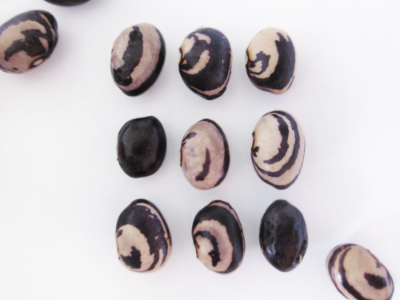
[Japanese: 貝豆; Romaji: Kaimame (Kai = seashell/shell, mame = bean), Kaigaramame (Kai = seashell/shell, gara = design, mame = bean), aka “Kiagara Mame” in US; English: Shell/Shellfish Bean, Shell/Shellfish Design Bean]
(Pole) A native variety of Hokkaido, Japan. It is currently grown in localized areas, which includes Engaru Town in the Okhotsk region of Hokkaido.
“放射状の縞模様が貝殻そっくりなので、貝豆と呼ばれています。” (Seedlabo, 2024)
“They are called shellfish beans [貝豆, kaigaramame] because their radial striped pattern resembles a seashell [貝殻そっ].” (Seedlabo, 2024)
“貝殻の斑紋に似ているので「貝殻豆」ともよばれています。農家では若さやのとき、さやごとゆでてお煮しめ、酢味噌和えなどにして食べていました。餡にするとあっさりしてクリーミーなのが特徴です。ペーストにしてオリーブオイルとにんにく、塩、コショーで味付けしディップとして野菜やパンの付け合せにもなります。” (Beniya Hasegawa Shoten, 2024)
[English] “They are also called “shell beans” [「貝殻豆」] because they resemble the markings on a shell [貝殻の斑紋, ‘shellfish’, refers to the shell of a marine mollusk]. Farmers used to eat them when they were young, boiling the whole pod and simmering them, or dressing them in vinegared miso. When made into a paste, they are characterized by their light and creamy taste. They can also be made into a paste and seasoned with olive oil, garlic, salt, and pepper to make a dip to accompany vegetables or bread.” (Beniya Hasegawa Shoten, 2024)
Kaimame was brought by settlers or as part of Meiji era agriculture introductions to Japan during the Hokkaido development period, under the Meiji government (1868-1912). (fmyokohama; Seedlabo, Japan) This variety is for dry use, and for fresh use as young pods.
“主に北海道のオホーツク地方で栽培されていますが、オホーツク地方では明治時代に農地を開拓する時に海外からお豆を取り寄せた歴史がある事から、貝豆もこの時に導入されたのではないかと考えられています。” (fmyokohama, March 14, 2020) 1
[English] “It is mainly grown in the Okhotsk region of Hokkaido, but since there is a history of importing beans from overseas when farmland was developed in the Okhotsk region during the Meiji period, it is thought that shell beans were also introduced at that time.” (fmyokohama, March 14, 2020) 1
Days to Maturity: