
Mostoller Wild Goose
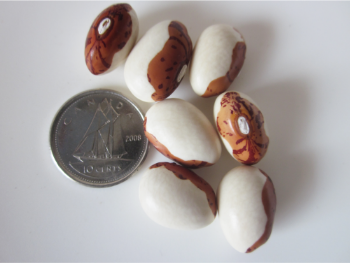
(Pole) The origins of this bean are attributed to the Mostoller family of Somerset, Pennsylvania. Joseph and Sara Mostoller had two sons, David and Civil War veteran John W. Mostoller. John went hunting the fall of 1865 and shot a lone goose. He brought it home and while his mother, Sara prepared it she found beans inside of its craw. The family saved the beans and planted them in the spring of 1866 and continued to pass them on.
According to food historian William Woys Weaver, the origins story of the Mostoller’s bean was iterated in the December 9, 1925 ‘Somerset Democrat’ (Somerset, Pennsylvania). (‘Heirloom Bean Varieties’ by William Woys Weaver, February 15, 2013 1; IL CR R, SSE, 2024)
History
“Pole/Dry. 100+ days. Flower white. Plants are vigorous, productive climb to over six feet. Pods are flattened, wide which average about 4 seeds per pod. In the autumn of 1865 one of the two sons of Joesph Mostoller. Either David or John shot a lone goose in Somerset county Pensylvania. Upon preping the goose for a meal. Joseph’s Wife Sara found the unusual beans in the goose’s crop. Dried and planted them in the spring of 1866. Now this beautiful bean is still with us after five generations.” (Russell Crow, SSE, 2024)
Days to Maturity: