
Pois-Fève Laliberté
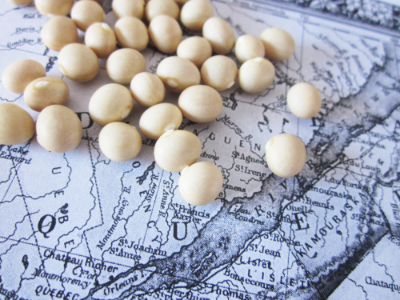
(Pois-Fève Laliberté, English: ‘Laliberté Pea-Bean’)
(Bush) As of 1999, Pois-Fève Laliberté was cultivated for decades by Mr. Laliberté in Lotbinière, Quebec. 1 Seeds were passed from Mr. Laliberté’s son to seed preservationist Antoine D’Avignon, who was a member of Semencier du Patrimoine. 2
According to Semences de Nouveau Monde,
“Le plant ressemble à (et est véritablement) un haricot, et le grain à un pois. Pour cette raison, en Europe ce type de haricot est appelé ”Haricot Coco””
[English: “The plant resembles (and truly is) a bean, and the grain resembles a pea. For this reason, in Europe this type of bean is called ‘Coconut Bean'”]
Days to Maturity:

History
The Terre Promise listing and Potager d’Anton article for Pois-Fève Laliberté share the origins and history of the Pois-Fève Laliberté variety:
“60 jours à maturité. Haricot nain qui produit une légumineuse à mi-chemin entre le pois et la fève. Selon le Potager d’Antan : « En 1999, elle était cultivée par Monsieur Laliberté de Lotbinière âgé de 80 ans qui confirmait le caractère unique de cette plante dans tout le Canada. (…) Remis par le fils de Monsieur Laliberté à Antoine D’Avignon, un ange protecteur du Semencier du Patrimoine. Décédé en 2003, c’est sa soeur, Madame Gisèle Davignon qui nous les a transmises. » (Potager d’Anton 3)
Délicieuse en soupe au pois, mets traditionnel au Québec au début du siècle dernier. Cette variété est considérée comme très rare et en danger d’extinction.” (Terre Promise 4)
[English: “60 days to maturity. A dwarf bean that produces a legume halfway between peas and beans. According to the Potager d’Antan, “In 1999, it was cultivated by 80-year-old Mr. Laliberté of Lotbinière, who confirmed the unique character of this plant throughout Canada. Given by the son of Monsieur Laliberté to Antoine D’Avignon, a protective angel of the Semencier du Patrimoine. His sister, Mrs. Gisèle Davignon, passed them on to us in 2003.” 3
Delicious in pea soup, traditional dish in Quebec at the beginning of the last century. This variety is considered very rare and endangered.” (Terre Promise 4)]