
Rouge de Paris
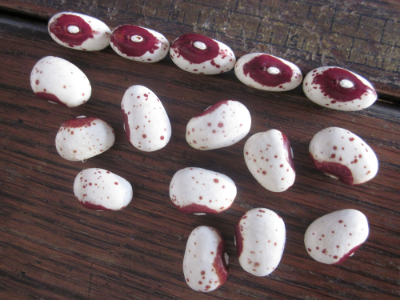
(Rouge de Paris, Rote von Paris, Rouge von Paris)
(Bush) Dry use bush bean. Introduced 1855 at the Paris Expo, of which it is named for. Rouge de Paris later received mention as ‘Ph. oblongus cruentus hort. Paris.‘ in the 1860 German language ‘Die Gartenbohnen’ by Georg von Martens. This strain was introduced to the United States by food historian and gardener, Dr. William Woys Weaver, as ‘Rouge de Paris’. He originally procured it from the German seed bank, Gattersleben. Circa 2016, Rouge de Paris was sold as ‘Rouge von Paris’ by the US based Baker Creek seed.
Days to Maturity: 50-60 days

History
Received mention in the 1860 German language ‘Die Gartenbohnen’ by Georg von Martens as ‘Ph. oblongus cruentus hort. Paris.‘ (Taf. VII, Fig. 8).
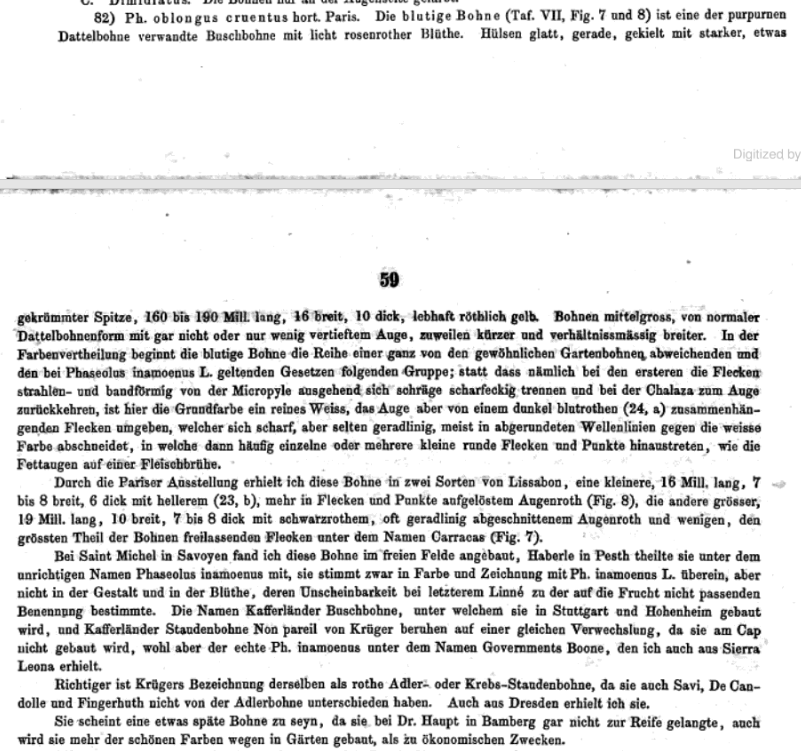 | 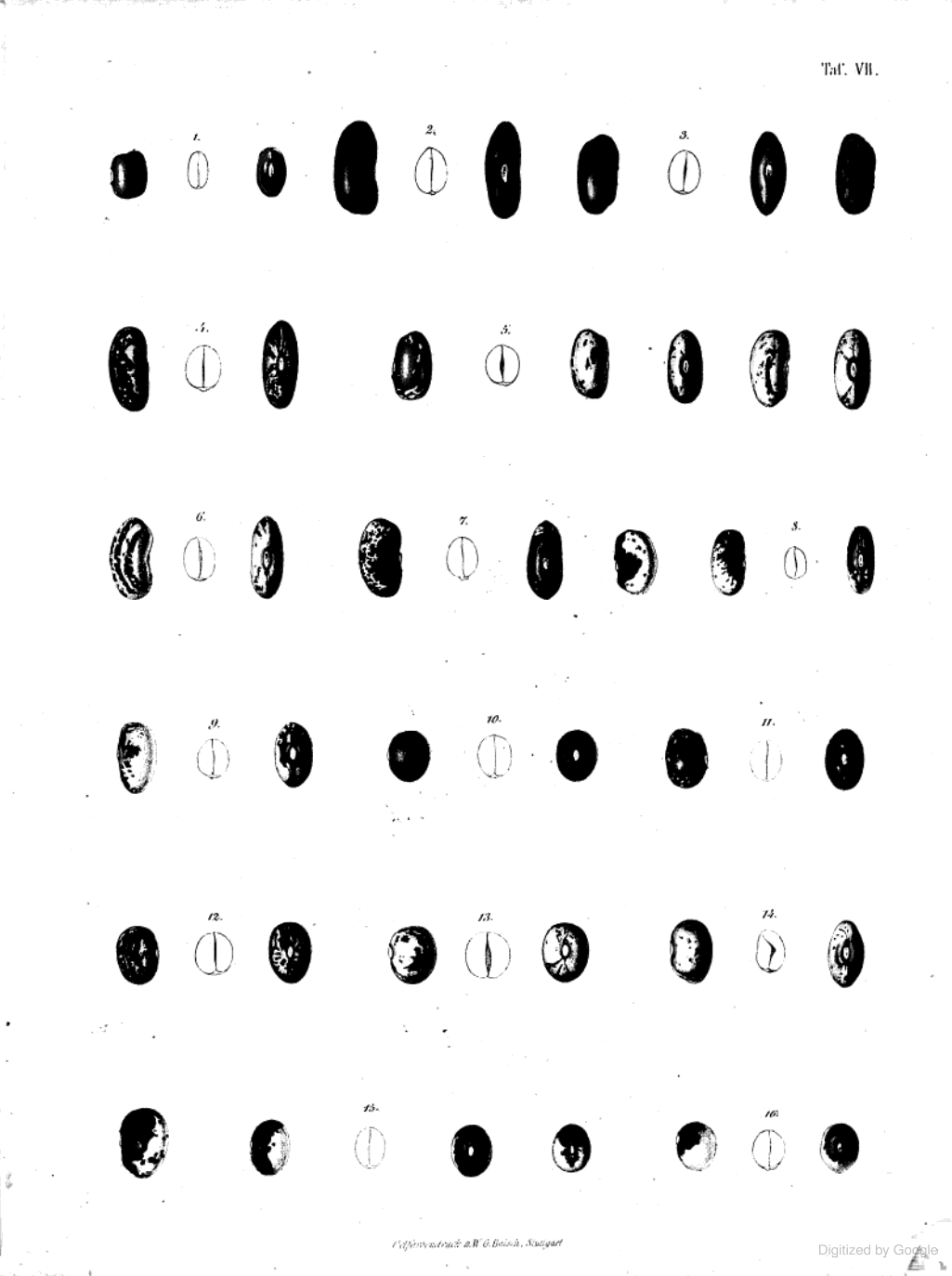 |
| Pg. 58, 59 ‘Die Gartenbohnen: ihre Verbreitung, Cultur u. Benützung’, Georg von Martens, 1860 | Taf. VII, Fig. 8, ‘Die Gartenbohnen: ihre Verbreitung, Cultur u. Benützung’, Georg von Martens, 1860 |
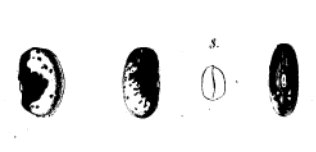 | |
| [Enlarged] Taf. VII, Fig. 8, ‘Die Gartenbohnen: ihre Verbreitung, Cultur u. Benützung’, Georg von Martens, 1860 |
Georg von Martens notes in ‘Die Gartenbohne’,
“Durch die Pariser Ansstellung erheilt ich diese Bohne in zwei Sorten von Lissabon, eine kleinere, 16 Mill. lang, 7 bis 8 breit, 6 dick mit hellerem (23, b), mehr in Flecken und Punkte aufgelöstem Augenroth (Fig. 8), die andere grösser, 19 Mill. lang, 10 breit, 7 bis 8 dick mit schwarzrothem, oft geradlinig abgeschnittenem Augenroth und wenigen, den grössten Theil der Bohnen freilassenden Flecken unter dem Namen Carracas (Fig. 7).” (Pg. 59 ‘Die Gartenbohnen: ihre Verbreitung, Cultur u. Benützung’, Georg von Martens, 1860)
[English] “Through the Paris exhibition [Pariser Ansstellung] I obtained this bean in two varieties from Lisbon [Note: Lisbon, Portugal, capital city of Portugal], one smaller, 16 Mill. long, 7 to 8 wide, 6 thick with a lighter (23, b) red eye, more broken up into spots and dots (Fig. 8). […]”. (Pg. 59 ‘Die Gartenbohnen: ihre Verbreitung, Cultur u. Benützung’, Georg von Martens, 1860)
“There are a couple of varieties of beans given this name which is also called Rote von Paris. Somehow the German and French keeps getting mixed together [Note: reference to ‘Rouge de Paris’ and ‘Rouge von Paris’]. The oldest variety by this name is the one you have as described by Georg von Martens in his 1860s book on beans. It is even illustrated I believe. The name referred to the fact that the bean was introduced at the 185[5] Paris Expo (nothing to do with its real origin). The solid red bean [Note: a variety introduced in the 1990s by the French seed company Baumaux from Angers] is something later and I suspect, as has been the case in the past, that Baumaux has inserted a new name or an old name on something new. It was common practice in Eastern Europe to name any bean de Paris or von Paris if the seed was distributed in the East by Vilmorin. This takes us into very murky water because the local names are confusing. It’s like a lettuce we have with 73 different monikers!!! Baker Creek got their seed from us, and we received our seed many years ago from Gattersleben, the German seed bank.” [Dr. William Woys Weaver (W3), 2025]
“This beautiful bush bean was first introduced at the Paris Expo in 1854 and created a horticultural sensation. It now has many commercial aliases because it was later grown extensively in Germany and Central Europe. The short, 15-inch plants produce an abundance of red and white beans which are harvested either as a shelling bean or as a dry bean for soups and stews. Chefs like it because it holds its pattern when cooked thus giving many dishes added eye appeal.” (Baker Creek, 2016; rec. 2025)